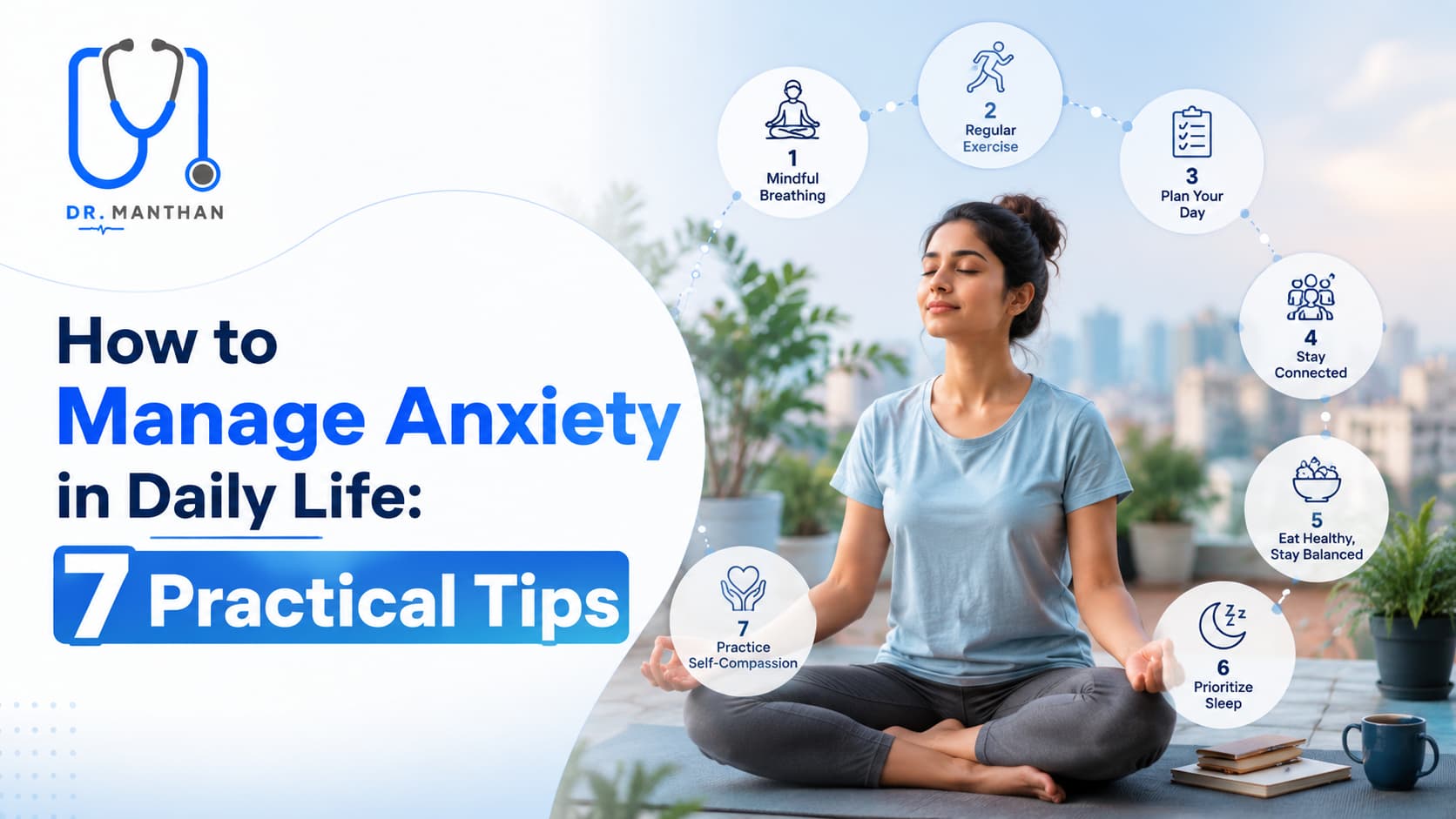
How to Manage Anxiety in Daily Life
When you experience severe worry, your body relies on an ancient biological mechanism designed to keep you safe from danger. You may think of this system as a built-in home security alarm. In our fast-moving modern world, however, this alarm system frequently becomes a bit too sensitive. Instead of alerting us to an actual physical threat, it sounds during routine moments. These moments include navigating heavy city traffic, waiting for a delayed email response, or trying to manage a demanding daily schedule. When that underlying sense of tension begins to shadow your work, relationships, and quiet moments, it is time to look at effective ways to steady your nervous system.
Across India today, unique social pressures significantly shape our collective mental health. From intense academic competition and grueling corporate routines to the rapid shift toward urban living, the triggers for daily stress are everywhere. Data from the World Health Organization shows that anxiety conditions are incredibly widespread, cutting across all age groups and professions. True wellness does not mean trying to erase these emotions. Rather, true wellness is about building a reliable toolkit to process the stress smoothly before it turns into overwhelming panic.
Distinguishing between everyday situational worry and clinical anxiety disorder symptoms is a critical first step. It is perfectly natural to feel a flutter in your stomach before a big presentation or a major life event. Normal worry resolves once the event passes. Chronic anxiety, on the other hand, lingers stubbornly even when there is no immediate pressure. Fortunately, by adopting a few evidence-backed habits, grounding routines, and practical lifestyle changes, you can guide your body back to a state of calm.
Physiology of Stress
To manage stress effectively, it helps to understand what goes on under the hood when your mind perceives an obstacle. The moment you register a stressful event, a small region in your brain called the amygdala fires off a warning signal. This signal tells your body to release a surge of hormones, mainly adrenaline and cortisol. Your heart rate speeds up, your muscles tighten, and your breathing turns shallow and rapid. This biological response is brilliant if you need to run away from physical danger. However, when it stays switched on for hours because of everyday desk stress, it leaves you feeling deeply drained.
Leading medical institutions, including the Mayo Clinic, emphasize that keeping this stress response active for too long eventually shows up as physical symptoms of anxiety. Many patients come into clinics complaining of persistent tension headaches, constant fatigue, stiff shoulders, or digestive issues like Irritable Bowel Syndrome. Realizing that chronic worry is as much a physical experience as a mental one allows us to use physical, body-based tools to disrupt the cycle before it escalates.
Breathing and Grounding Techniques to Reduce Stress
One of the fastest anxiety management techniques to turn down a hyperactive stress response is to take conscious control of your breath. Chest breathing sends a continuous danger message to your brain. Shifting into deep, rhythmic abdominal breathing immediately engages your parasympathetic nervous system, which is the natural braking system of the body. This shift gently lowers your heart rate and stabilizes your mood.
A simple technique utilized by healthcare professionals globally is box breathing. The practice is remarkably easy to remember. You inhale through your nose for a count of four, hold that air in your lungs for four seconds, exhale completely through your mouth for four seconds, and pause with empty lungs for another count of four. Moving through this cycle four or five times acts as a physical reset button for your cardiorespiratory rhythm, cutting the physical circuit of panic.
When your thoughts spin out of control into future projections, long-tail search queries show that patients frequently look for immediate relief. Grounding techniques offer an excellent anchor, a strategy widely recommended by the National Health Service. A favorite tool is the 5-4-3-2-1 exercise, which brings your focus squarely back to the present. Pause where you are and quietly identify five things you can see around you, four things you can physically feel, three distinct things you can hear, two things you can smell, and one thing you can taste. Because these strategies require absolutely no tools, you can use them completely unnoticed in a crowded metro or right in the middle of a busy office meeting.
Exercise and Movement to Reduce Anxiety
Consistent physical movement is one of the most effective natural ways to reduce anxiety and stress. When you exercise, your brain increases the production of endorphins, which are the natural mood lifters of the body. Physical activity also gives all that stored adrenaline and cortisol a productive place to go, rather than letting it sit and curdle into mental restlessness.
Clinical insights from healthcare networks like Medanta and Max Healthcare highlight that regular cardiovascular habits, like a simple 30-minute brisk walk, can reduce baseline stress levels over time. For many people, a daily walk provides a perfect, low-barrier way to clear the mind and ease physical tension.
Pairing aerobic exercise with progressive muscle relaxation can help you target the physical knots that worry leaves behind. This technique involves deliberately tensing a specific muscle group, like shrugging your shoulders tightly toward your ears, holding the contraction for five seconds, and then letting it go entirely. Recognizing the contrast between tension and relaxation helps you catch and release stress earlier in the day.
Designing Better Routines to Manage Anxiety
Anxiety thrives on uncertainty and a lack of structure. Introducing a predictable rhythm to your days provides your mind with a comforting sense of stability. When core habits like your waking hours, meal times, and work boundaries remain relatively steady, your brain does not have to waste energy processing constant micro-decisions. This keeps your overall cognitive load much lighter and aids in natural ways to reduce anxiety.
Prioritizing Quality Sleep
Sleep and mental health are deeply connected. A poor night of sleep leaves you vulnerable to stress, while high stress makes it incredibly difficult to rest. Breaking this cycle requires a dedicated wind-down routine. Try turning off smartphones and laptops an hour before bed, keeping your sleeping space cool and quiet, and avoiding heavy, spicy meals late at night.
Managing Dietary Triggers
What you consume throughout the day directly impacts your nervous system. Large amounts of caffeine, whether from multiple cups of strong coffee, milk tea, or energy drinks, can mimic the exact physical sensations of panic by triggering heart palpitations and jitters. Gradually cutting back on caffeine and prioritizing consistent hydration can prevent these artificial spikes in physical tension.
Mental Reframe Techniques to Reduce Anxiety
Much of our daily worry stems from cognitive distortions, which are automatic, exaggerated thought patterns that convince us things are far worse than they actually are. You might find yourself catastrophizing, which means jumping straight to the worst-case scenario, or falling into all-or-nothing thinking. Managing these moments involves learning to notice these thoughts as they roll in, questioning their validity, and reframing them with a dose of reality.
Instead of accepting every anxious thought as an undeniable fact, try viewing them as mere suggestions from an overworked brain. Ask yourself practical questions regarding whether there is actual proof for what you are worrying about, or what the most likely, realistic outcome is. Over time, intentionally pausing to challenge these narratives weakens the automatic worry habit and builds lasting mental resilience.
Seeking Professional Help
While anxiety coping strategies, lifestyle changes, and mindfulness exercises are wonderful for managing everyday stress, they are best viewed as foundational pieces of a broader health picture. It is essential to recognize when anxiety warrants a conversation with a qualified professional. If your symptoms have been constant for over six months, cause deep distress, or make it difficult to manage your job, studies, and family life, scheduling a consultation with a certified professional is a strong, positive step forward.
As outlined by comprehensive mental health resources like NHS Inform and the Better Health Channel, highly reliable, evidence-based anxiety treatment options are readily available to help you heal:
|
Approach |
Core Strategy |
What It Involves |
|
Cognitive Behavioral Therapy |
Unpacking and reshaping unhelpful thought loops and behaviors. |
Practical, structured sessions with a therapist, exercises, and coping strategies. |
|
Medical Treatment |
Tuning brain chemistry to alleviate severe, disruptive physical symptoms. |
Careful assessment and prescription management by a licensed psychiatrist. |
|
Counseling and Support |
Process specific life transitions, relationship dynamics, or ambient stressors. |
One-on-one talk therapy and community-focused emotional support spaces. |
Reaching out to a psychiatrist or a clinical psychologist specializing in trauma or stress is an admirable act of proactive self-care. Modern mental health professionals work closely with you to build an individualized approach, pairing lifestyle adjustments with clinical tools that respect your unique background and goals.
Long-Term Balance
Learning to navigate daily stress is a continuous journey of self-discovery rather than a goal with a final end date. By weaving tiny, sustainable habits into your day, such as protective sleep schedules, intentional breathing, and regular movement, you build a resilient baseline for your physical and mental health.
True emotional wellness also requires learning to set firm personal boundaries, being kind to yourself when things do not go perfectly, and understanding that taking a break to rest is a vital part of staying strong. By treating your mind and body with consistent care, you can meet life's daily challenges with a steady heart and lasting peace.
Frequently Asked Questions
How can I handle sudden panic attacks?
The single most effective trick is to artificially lengthen your exhales. Breathing out for longer than you breathe in signals your brain that you are safe, naturally slowing your pulse. Combining this with a grounding exercise, like noticing the texture of an object in your hand, helps pull your mind away from internal panic.
Can changing my diet lower my stress?
Absolutely. Your gut and your brain communicate constantly. Limiting highly processed sugars and heavy caffeine helps you avoid sharp blood sugar crashes and physical jitters that feel exactly like an anxiety attack. Eating balanced meals with complex carbohydrates and proteins provides a steady stream of energy to your system.
How does stress differ from other disorders?
Everyday stress usually points to a clear external cause, like an approaching project deadline, and clears up once that event is over. An anxiety disorder feels much more persistent, sticking around even when everything is going smoothly, and regularly getting in the way of your sleep, health, and daily responsibilities.